
Your mouth is an important part of your overall health. Sources of chronic inflammation, infection, and potentially toxic dental materials can contribute to the biological burden placed on the body.
At Bonita Dental Studio, we look beyond individual teeth to consider how the materials and conditions present in the mouth may affect the patient as a whole.
Hidden Sources of Oral Toxic Burden
Infected Root Canals
Root-canal-treated teeth can sometimes harbor persistent microorganisms or develop inflammation around the tooth and surrounding bone. When symptoms or suspicious findings are present, further evaluation may be appropriate. IAOMT includes root-canal-treated teeth among the areas it evaluates within biological dentistry.
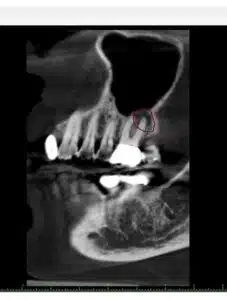
An actual 3D cone beam CT scan revealing infection around the tooth root that was not visible on a conventional 2d dental X-Ray
Metal Restorations and Implants
Dental metals can remain in the oral environment for many years. Biological dentistry considers not only the strength and function of a dental material, but also its biocompatibility, potential for corrosion, interaction with other metals, and the patient’s individual response.
Oral Galvanism
When two or more dissimilar metals are present in the mouth, saliva can act as an electrolyte, creating a small electrical current between the metals. This phenomenon is known as oral galvanism.
Different combinations of crowns, bridges, metal fillings, and implants can create the conditions for galvanic interaction. IAOMT includes oral galvanism among the considerations associated with dental metals and material biocompatibility. IAOMT — Biological Dentistry
Mercury Amalgam Fillings
Traditional dental amalgam fillings contain approximately 50% elemental mercury by weight, combined with metals such as silver, tin, and copper. Mercury vapor is released from amalgam restorations, and the amount released can increase with activities such as chewing, grinding, brushing, and during removal.
For patients choosing to replace amalgam fillings, Bonita Dental Studio follows IAOMT’s Safe Mercury Amalgam Removal Technique (SMART) recommendations, which are specifically designed to reduce mercury exposure to the patient, dental team, and environment during amalgam removal. IAOMT — Safe Mercury Amalgam Removal
Metal Restorations & Dental Implants
Other dental restorations may contain nickel, chromium, cobalt, palladium, titanium, or other metal alloys. Titanium and titanium alloys are also widely used for dental implants.
Biological dentistry considers the patient’s existing dental materials, possible metal sensitivities, corrosion and interaction between different metals when determining whether a particular restorative material is appropriate.
Dental materials interact with the biological environment of the mouth, and individual responses can vary. Biological dentistry places particular emphasis on biocompatibility and reducing unnecessary exposure to potentially toxic materials.
Hidden Jawbone Infections
Areas of compromised or necrotic bone can occur in the jaws, including at previous extraction sites. These conditions can be difficult to identify on routine dental X-rays, and CBCT imaging may provide additional diagnostic information when clinically indicated. IAOMT’s current position paper addresses these lesions as Chronic Ischemic Medullary Disease of the Jawbone (CIMDJ).
If you are considering having existing restorations replaced, our pages on SMART certified amalgam removal and detox protocol support explain how we approach that work, and Healing Well covers what supports recovery afterward.